Introduction: Engineering Success at the Moment of Payment
A loyal customer tries to renew their subscription. Their card is valid. They have funds. They want to pay. But the payment fails anyway.
Not because of fraud. Not because of insufficient funds. But because the payment infrastructure—built decades ago for a different economy—can’t recognize a legitimate transaction when it sees one.
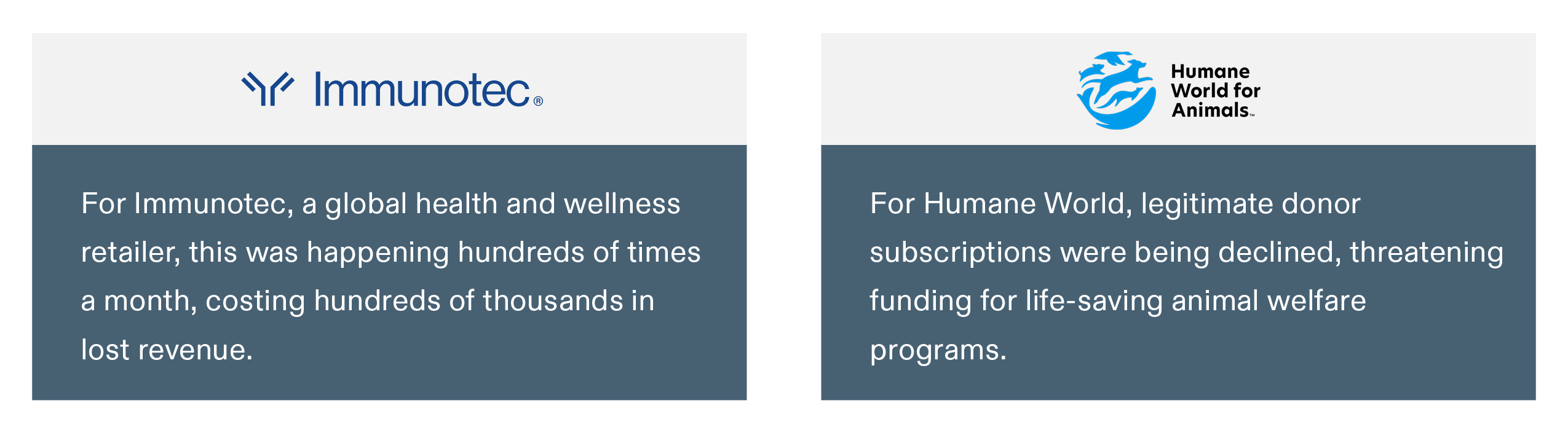
These aren’t isolated glitches. They’re symptoms of a larger system failure; one that punishes good customers, erodes trust, and drains billions in revenue from the digital economy every year.
And the problem isn’t that payments fail. It’s that the system was never designed to ensure legitimate payments succeed.
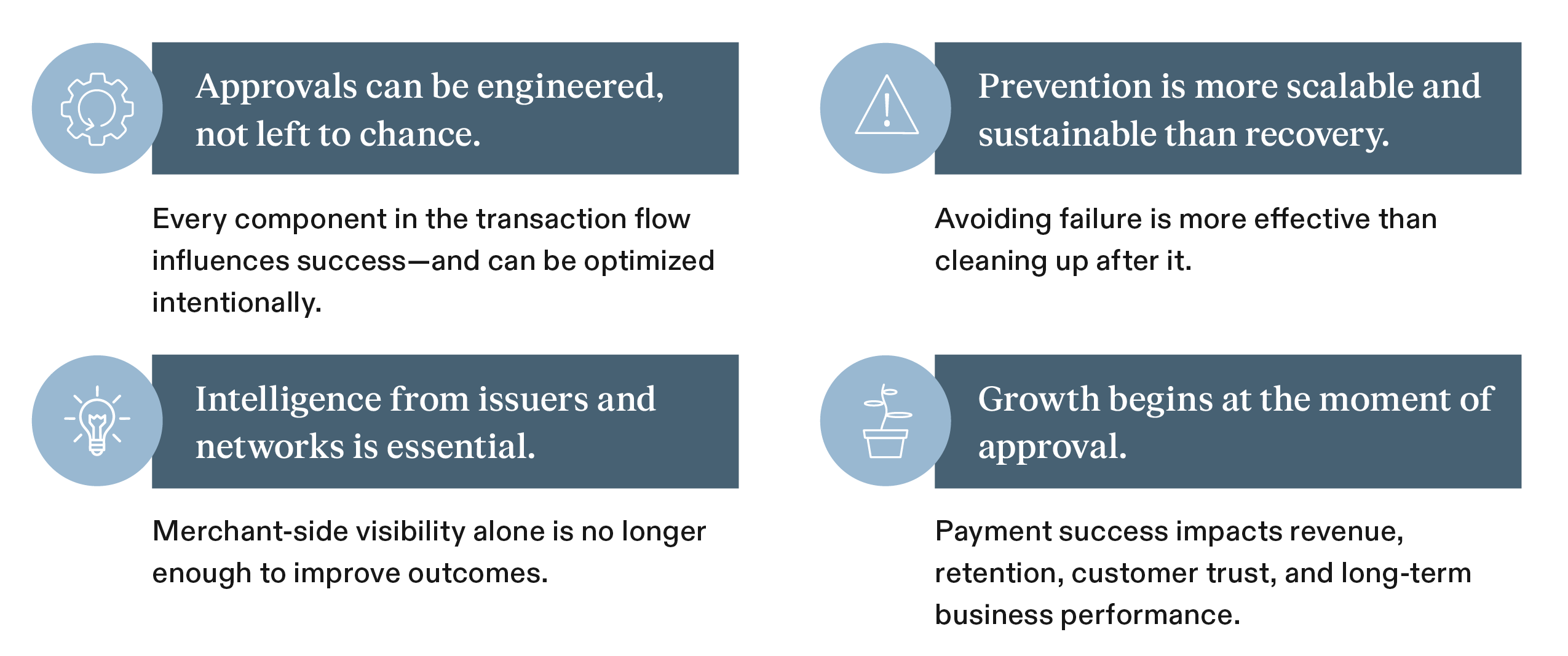
Most businesses still treat payments as an operational function—a process that either works or doesn’t. But approvals aren’t mechanical outcomes; they’re decisions made across networks, issuers, gateways, and data systems. Every one of those decisions can be influenced.
The leaders shaping the next decade of commerce are starting to see payments differently. They understand that performance isn’t just about recovery after failure—it’s about engineering success before it ever happens.
Because in modern commerce, every legitimate transaction should be approved by design, not by chance.
That realization has led to the rise of a new discipline—Payment Performance Management (PPM)—and this eBook will explore how it’s transforming payments from a background process into a strategic growth engine.
The Payment Approval Gap
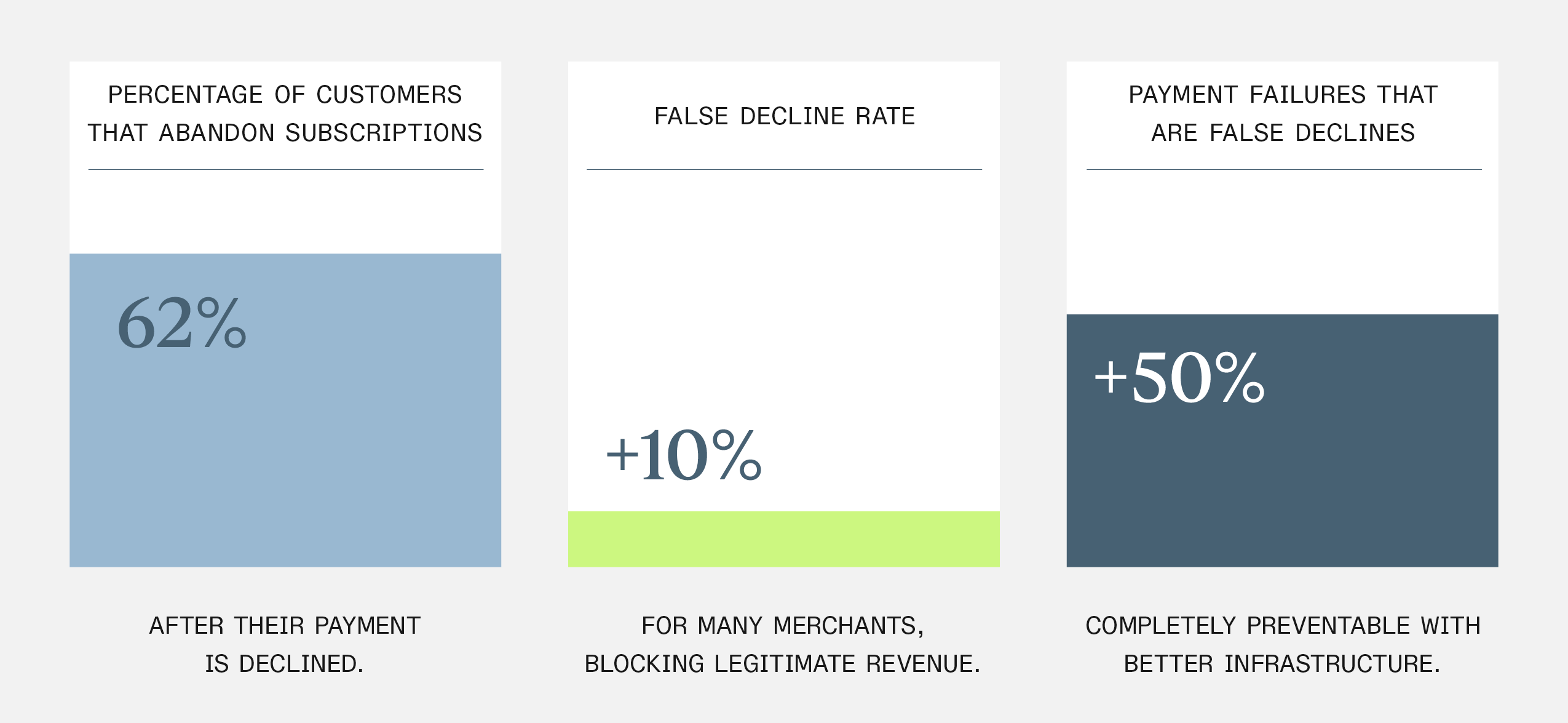
The payments industry loses $430 billion every year—not to fraud, but to false declines where valid transactions are incorrectly rejected.
Why Legitimate Payments Fail
Payment failures stem from a fundamental mismatch between how modern commerce works and how the payment infrastructure was designed.
Key drivers include:
- Outdated risk models - Recurring subscriptions and cross-border transactions are flagged as risky, despite being standard business practices.
- Incomplete data - Issuers making decisions with a fraction of the context they need to approve confidently.
- Disconnected systems - Merchants, processors, networks, and issuers operating in silos without shared intelligence.
- Overly aggressive fraud filters - Systems biased toward decline because fraud losses appear on the P&L but false declines don’t.
The result: loyal customers can’t complete purchases they want to make, revenue disappears, and trust erodes.
The Scale of the Problem
The Hidden Economics of Approval Rates
Every percentage point of approval rate improvement directly translates to bottom-line revenue. But the impact
goes far deeper than just capturing more transactions.
1. Wasted Customer Acquisition Costs (CAC)
You’ve already paid to acquire that customer through ads, content, partnerships, or sales. When their legitimate payment fails and they churn, every CAC dollar goes to waste—and you’ll spend even more to replace them.
- Acquiring new customers is 5-25X more expensive than retaining existing ones.
- The likelihood of selling to a new customer: 5-20%; to an existing customer: 60-70%.
- US businesses lose $136.8 billion per year due to avoidable customer switching.
- Average CAC has increased 222% in the last 5 years.
2. Lost Customer Lifetime Value
A failed payment doesn’t just mean lost revenue today—it means the end of a long-term relationship, and the disappearance of every renewal, upsell, and future purchase that customer would have made.
3. Brand Reputation Damage
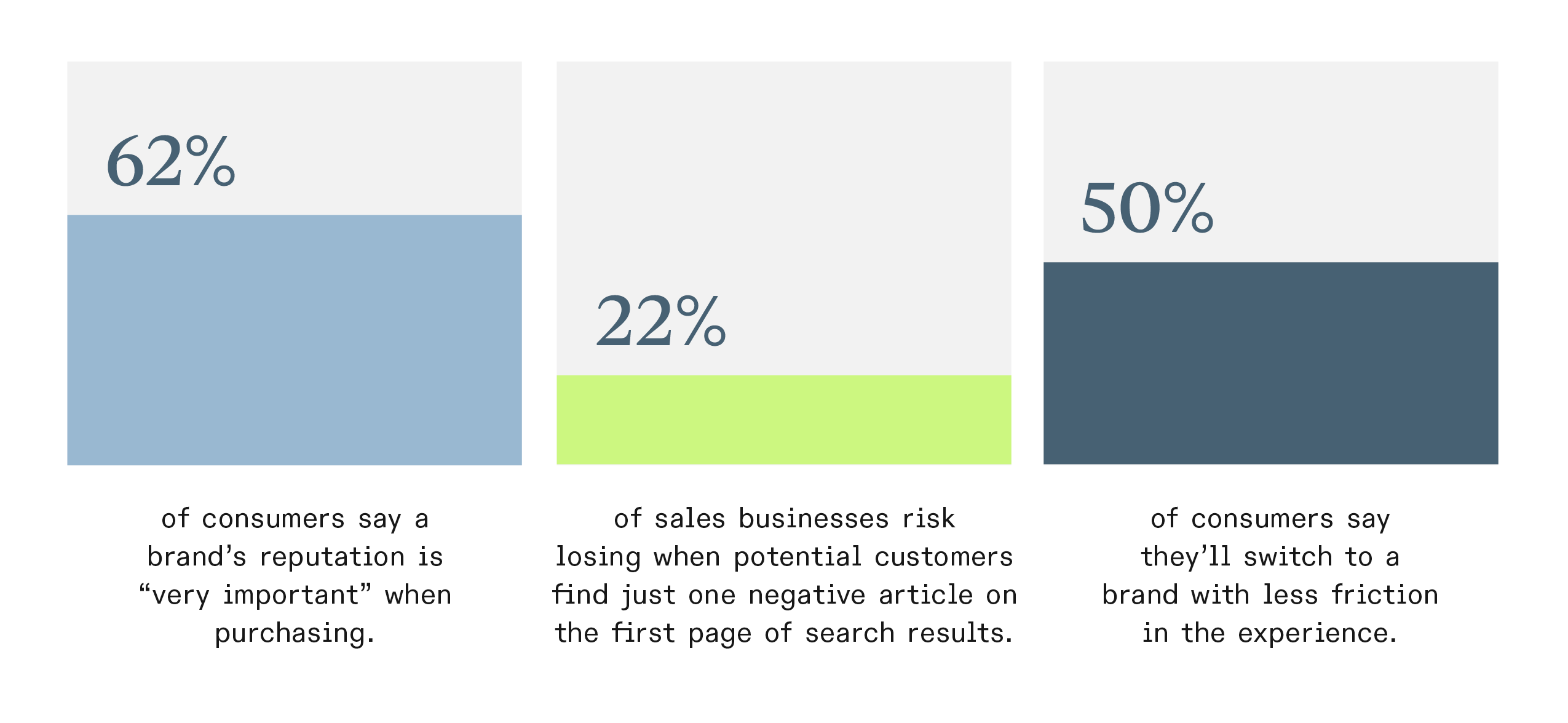
Customers don’t blame “the payment system” when their transaction fails—they blame you. Declines create a perception that your brand is unreliable or hard to buy from.
The Solution: Payment Performance Management
What is Payment Performance Management?
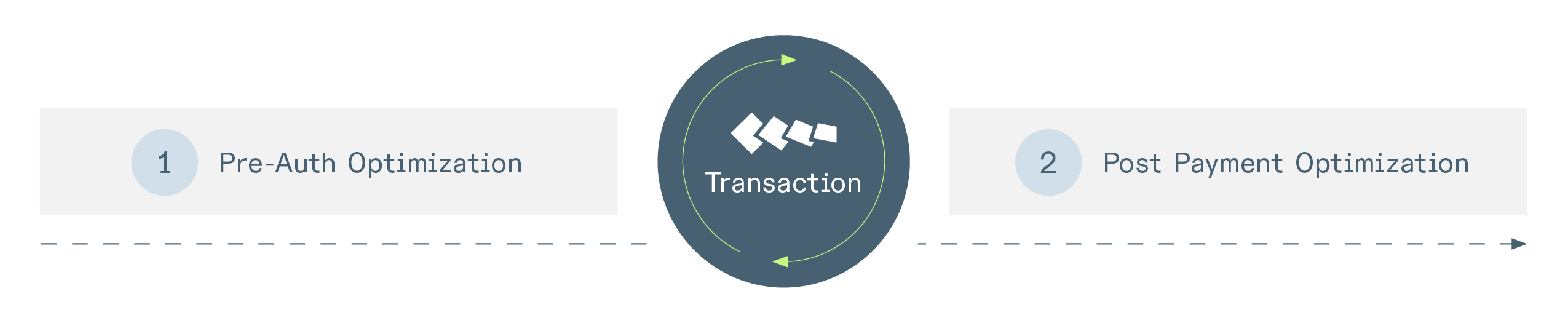
Payment Performance Management (PPM) is the emerging discipline of ensuring that every legitimate transaction succeeds—not by chance, but by design.
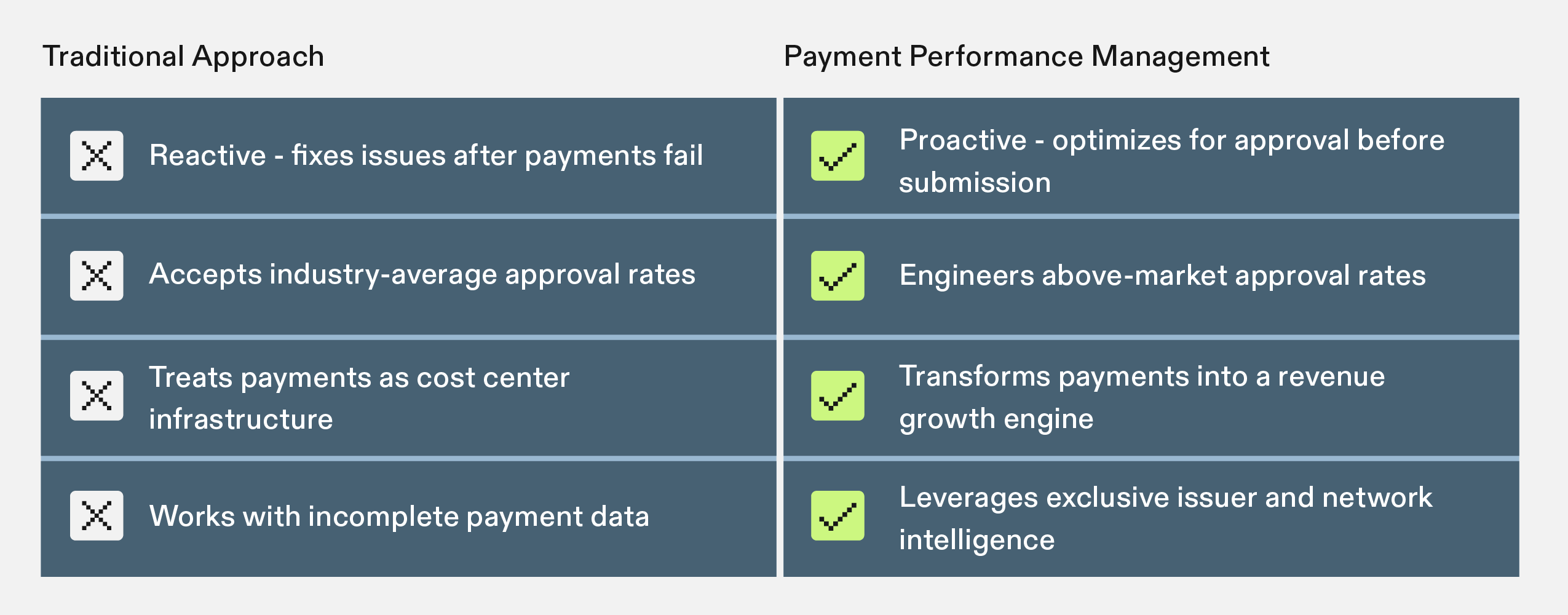
Traditionally, businesses have focused on fixing payment failures after they happen. They rely on dunning emails, support outreach, or retry logic to recover lost revenue. But failure itself is often a symptom of a deeper issue: a fragmented payments ecosystem that struggles to process legitimate transactions correctly.
Each failed payment is the result of a sequence of decisions—how the transaction is formatted, how fraud systems score it, how the gateway interprets it, and how the issuer responds. None of these systems are inherently malicious or broken, but together, they create complexity that makes approval unreliable.
PPM addresses this complexity by shifting the focus upstream. Rather than waiting for a failure to occur, it looks at the full transaction lifecycle—before, during, and after authorization—and applies intelligence to maximize the likelihood of approval from the start.
Revaly was built around this exact philosophy. By integrating exclusive issuer and network intelligence with merchant-side data, Revaly gives businesses visibility into the approval moment that no other platform can offer. This intelligence allows every factor influencing the payment outcome to be proactively optimized—from how a transaction is structured to how it is routed and interpreted by the receiving issuer.
In doing so, Revaly helps businesses turn their payment systems from a hidden source of leakage into a measurable, controllable growth lever. When designed for performance, payments don’t just support revenue—they actively drive it.
The Core Principles of Payment Performance Management
How PPM Compares to Traditional Approaches
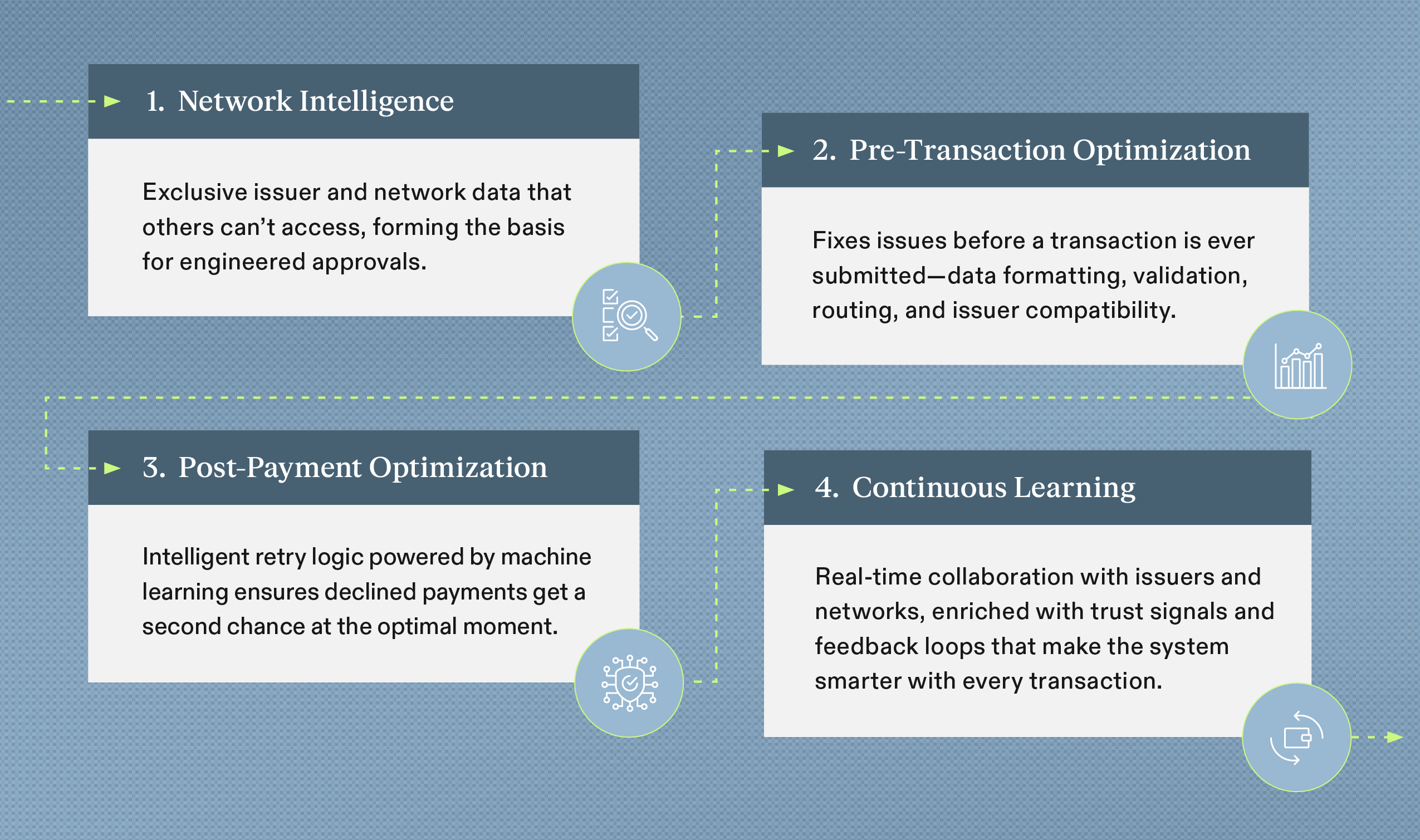
The Anatomy of Payment Performance Management
Revaly consolidates into one cohesive system what other platforms fragment across multiple vendors: routing, data optimization, issuer intelligence, and continuous learning. This optimizes the entire payment lifecycle.
What This Unified System Means for Merchants
- Higher approval rates that directly translate into more revenue, with zero added friction for customers
- Less involuntary churn, keeping more legitimate customers active on the first attempt
- A stronger end-to-end payment journey, with reliable performance optimized for your specific business
With every merchant onboarded, Revaly’s models become smarter—creating a system that learns, adapts, and drives compounding performance improvements across the network.
The Core Benefits of Payment Performance Management
Most businesses underestimate the impact of failed payments—not just on revenue, but on customer loyalty, acquisition efficiency, and growth predictability.
Payment Performance Management transforms that hidden weakness into a competitive advantage. By engineering approvals from the start, businesses move from reacting to failure to building a system that performs by design.
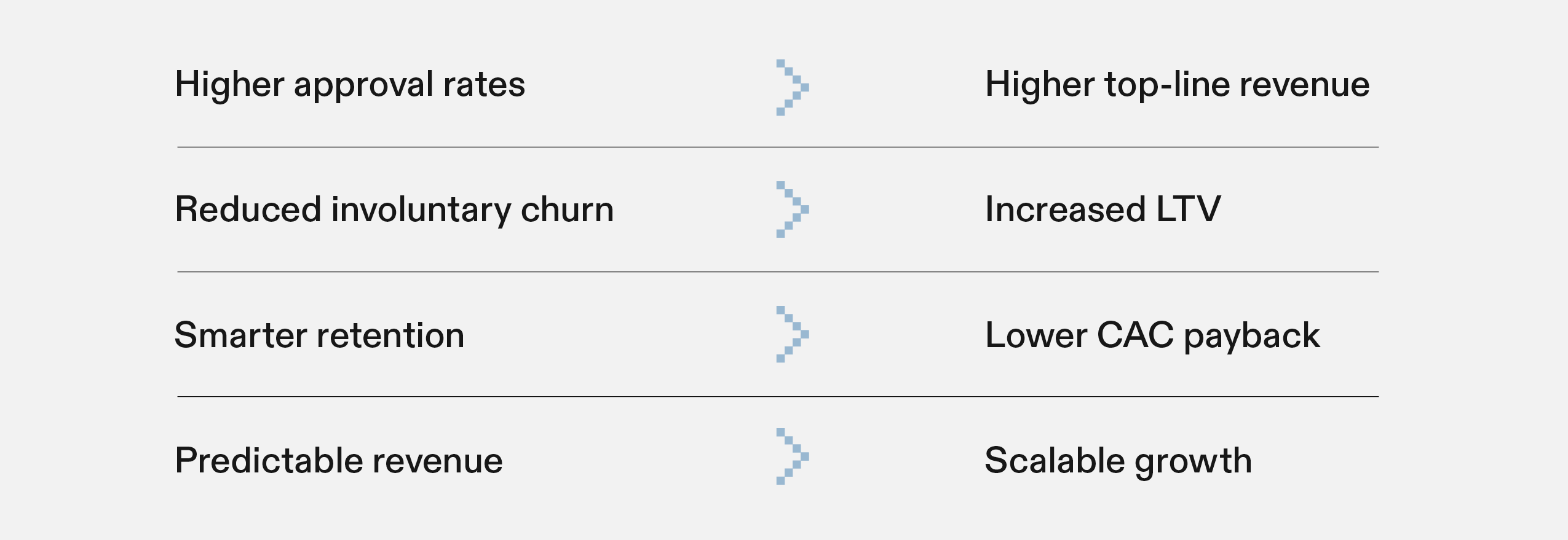
1. Higher Approval Rates → Higher Top-Line Revenue
Every successful transaction translates directly into cash flow and topline revenue. By reducing false declines, PPM enables businesses to recapture millions in lost revenue without spending a dollar more on marketing or sales.
Example: A business processing $100M in annual transaction volume would gain an additional $1M for every 1% increase in approval rates. And because these gains come from existing demand, they’re both efficient and scalable.
2. Reduced Churn → Increased LTV
Involuntary churn—when legitimate customers are lost due to preventable payment failures—erodes recurring revenue models. This is especially damaging in subscription, SaaS, and donor-funded businesses.
PPM ensures that loyal customers aren’t pushed out by system errors, preserving ongoing revenue and maximizing lifetime value.
3. Smarter Retention → Lower CAC Payback
The longer a customer stays active, the faster your CAC pays back—and the higher your ROI on marketing and sales. With PPM reducing churn and improving renewals, your acquisition engine becomes more efficient and sustainable.
This allows businesses to scale customer acquisition with greater confidence and less waste.
4. Predictable Revenue → Scalable Growth
When approval rates are engineered and optimized, revenue becomes more stable and reliable. This predictability enables better forecasting, more confident investor conversations, and a stronger foundation for international expansion or product launches.
Applying PPM Across Industries
Payment challenges aren’t one-size-fits-all. SaaS faces different obstacles than health and wellness retailers or nonprofits. Payment Performance Management adapts to the unique needs of each industry, optimizing approvals and protecting customer relationships in the ways that matter most to each business model.
Subscription and SaaS
Recurring billing is the lifeblood of subscription businesses, yet it’s also where payment failures hurt the most. Whether it’s a B2B SaaS platform or a meal kit service, declined payments mean revenue volatility, brand damage, and lost LTV.
Challenge: Even one missed renewal can trigger involuntary churn. Industry data shows that up to 15% of recurring transactions fail unnecessarily, directly undermining predictable Monthly Recurring Revenue (MRR).
Solution: Revaly’s proprietary issuer network signals ensure recurring payments are formatted, routed, and timed for approval success. Instead of accepting
industry-average approval rates, Revaly makes high performance approvals the standard.
Result: Higher renewal rates, predictable MRR, and customers who stay subscribed.
E-commerce and Retail
E-commerce has crucial, high-traffic moments like Black Friday or holiday sales where the margin for error shrinks to zero. Payment Performance Management gives
merchants the reliability they need when it matters most.
Challenge: False declines during peak sales windows create lost revenue and frustrated shoppers who may never return.
Solution: Pre-payment optimization formats and routes transactions correctly before they reach the issuer, maximizing first-attempt approval rates.
Result: Higher approval rates, fewer abandoned carts, and more revenue captured during critical selling periods.
Global Merchants
Every new market introduces new complexity. Cross-border payments often fail because transactions don’t align with local banking rules or fraud systems. Payment Performance Management bridges those gaps so global expansion doesn’t result in lost revenue.
Challenge: Cross-border transactions fail due to formatting mismatches, regional fraud controls, or issuer incompatibility.
Solution: Revaly’s exclusive issuer signals automatically adapt each transaction to local requirements, ensuring it’s recognized as legitimate.
Result: Smoother global approvals, fewer false declines, and successful new market expansion without approval rate degradation.
Non-profits and Donor-Funded Organizations
For nonprofits, every declined donation isn’t just lost revenue—it’s a missed opportunity to fund critical programs and may signal to donors that their support
isn’t wanted.
Challenge: Recurring donor payments fail at rates similar to commercial subscriptions, but nonprofits often lack the resources to manually recover them.
Solution: PPM ensures donor payments are optimized for approval, preserving ongoing funding relationships without requiring manual intervention.
Result: Predictable recurring donations, higher donor retention, and more resources available for mission critical work.
Why Payment Performance Management Matters Now
The future of payments is not about fixing what breaks. It’s about building systems that succeed from the start.
The demands on modern payments are only increasing. Customers expect instant, invisible experiences. Regulators expect compliance and transparency. Markets expect scale.
Without PPM, businesses will continue to leave revenue on the table—not because customers are unwilling to pay, but because the system still doesn’t know how to say “yes.”
Macro Trends Accelerating the Need for PPM
Cross-border transactions are exploding
Cross-border transactions are expected to hit $250 trillion by 2027—just two years away. Payment values already exceed global GDP by 1.8 times.
With 195 countries each having their own payment systems, regulations, and technological maturity, high rejection rates due to incorrect routing, security checks, and local regulatory requirements make cross-border commerce increasingly difficult.
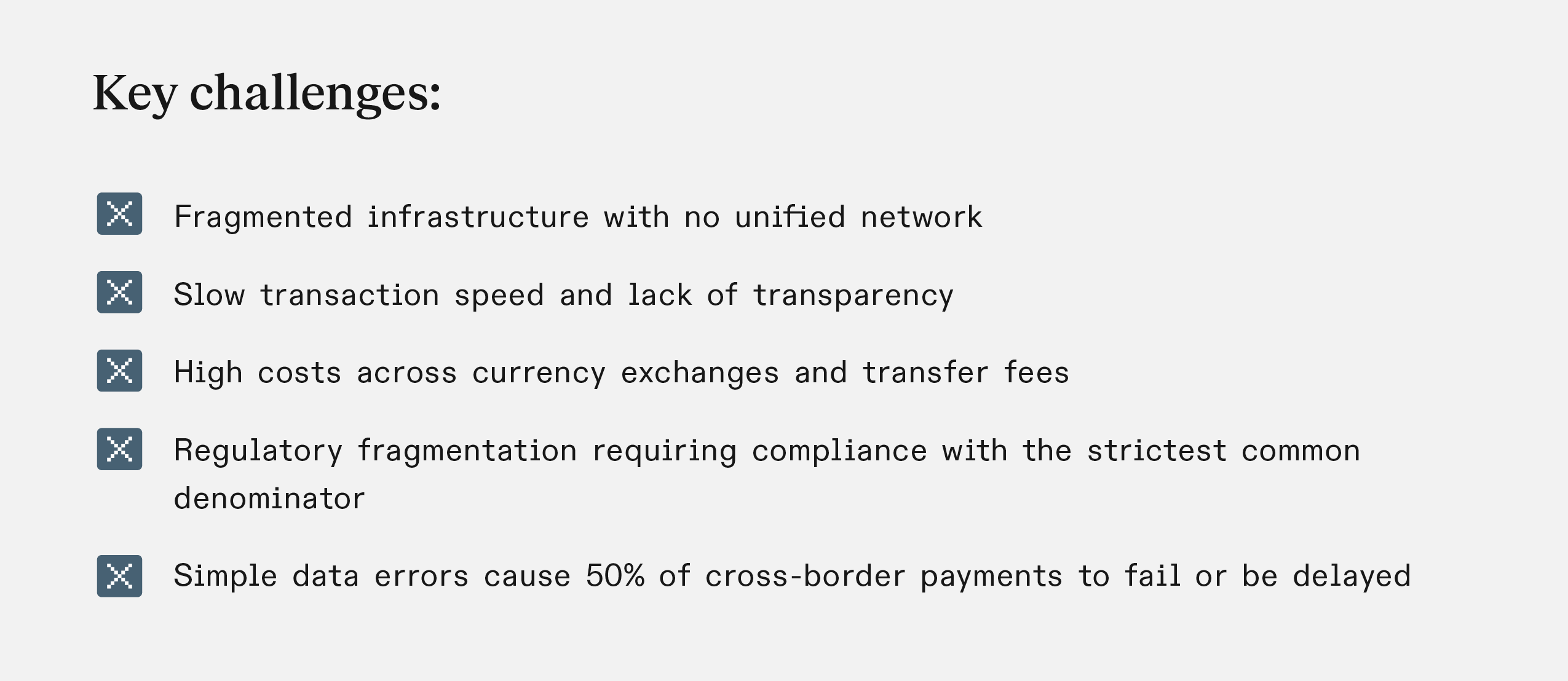
How PPM Helps: Cross-border payments will break at scale without PPM. By validating and formatting transaction data before submission and applying issuer-level intelligence, PPM reduces false declines, increases speed, and boosts approval rates globally.
Digital wallets are becoming dominant
Almost 53% of the global population used a digital wallet in 2024, with adoption expected to reach 68% by 2029. Digital wallets are estimated to drive 50% of point-of-sale transaction values by 2027.
However, payment infrastructure isn’t fully optimized for wallet payments, and regulation, licensing complexity, and compatibility issues create friction.
How PPM Helps: PPM operates as the connective tissue between wallets, merchants, and payment networks—ensuring transactions are routed correctly, formatted for approval, and optimized for reliability. This means higher approval rates, fewer abandoned transactions, and greater trust in digital wallets as a payment method.
Explore Payment Performance Management with Revaly
The next decade of growth will be decided at the moment of approval.
Payment Performance Management helps you keep more of the revenue you’ve already earned—by ensuring every legitimate transaction succeeds the first time.
Revaly was built for this mission. With exclusive issuer and network intelligence, deep transaction-layer optimization, and a platform that evolves with every merchant onboarded, we help businesses turn approvals into a true growth engine.
Ready to make every payment count? Contact our sales team to learn how Revaly can optimize your payment approval rates.